
Telco campaign rebuild

Right scores, wrong campaign
A major European telco launched a campaign that passed every pre-test it was subjected to. Intent scores were acceptable. Sentiment analysis was clean. Click-through prediction models flagged nothing. And in-market, it underperformed.
The campaign was not failing because the product offer was weak. The offer was strong. The campaign was failing because its communication layer was triggering a specific pattern of psychological resistance that none of the instruments pointed at it were built to see. Tone was being read as pushy where the audience expected generosity. Framing was being read as transactional where the relationship called for trust. Visual language was quietly contradicting the verbal promise, and the contradiction was registering somewhere below conscious awareness. Three unrelated-looking dissonances, layered, compounding - each small, collectively decisive. No scorecard built on surface response reads this pattern. It is not what scorecards are for.
How we worked it
Over four days the campaign was passed through five iterative reads. A depth-psychological analysis surfaced the emotional tensions the communication was triggering. A nonverbal response evaluation mapped where body language and facial micro-expressions registered discomfort the audience would never self-report. Generative work produced variants informed by the psychological findings - not alternative creative written in the dark, but creative written against the specific resistances the first reads had identified. A structured attention analysis validated whether the variants were earning the eye in the places the new copy required.
What matters about the process is less the four disciplines than the refusal to separate them. Traditional pre-testing runs each discipline as a handoff: research writes a report, agency writes alternatives, testing evaluates them, the loop goes dormant between rounds. We ran the four inside a single continuous read. The output of round one became the premise of round two. The premise of round three was a specific hypothesis round four was built to kill. By round five the campaign was no longer being evaluated; it was being validated.
What emerged
The campaign's central message moved from try for free to a thank-you gesture - a change that reads cosmetically like a copy edit and is, structurally, a different emotional contract with the audience. Try for free is a transactional posture the audience was rejecting below awareness. A thank-you gesture is a gesture of reciprocity - the brand offering something and asking nothing in return, which is the psychological position the offer was actually in and the communication had failed to occupy. The restructured campaign performed against the audience the original had been pushing away.
The output of this work was not a report with recommendations. It was a rebuilt campaign - tested, iterated, and validated against consumer reactions authentic enough that the next stop was air time. Most of our peers describe the final deliverable of a campaign read as a presentation. Ours is a campaign.
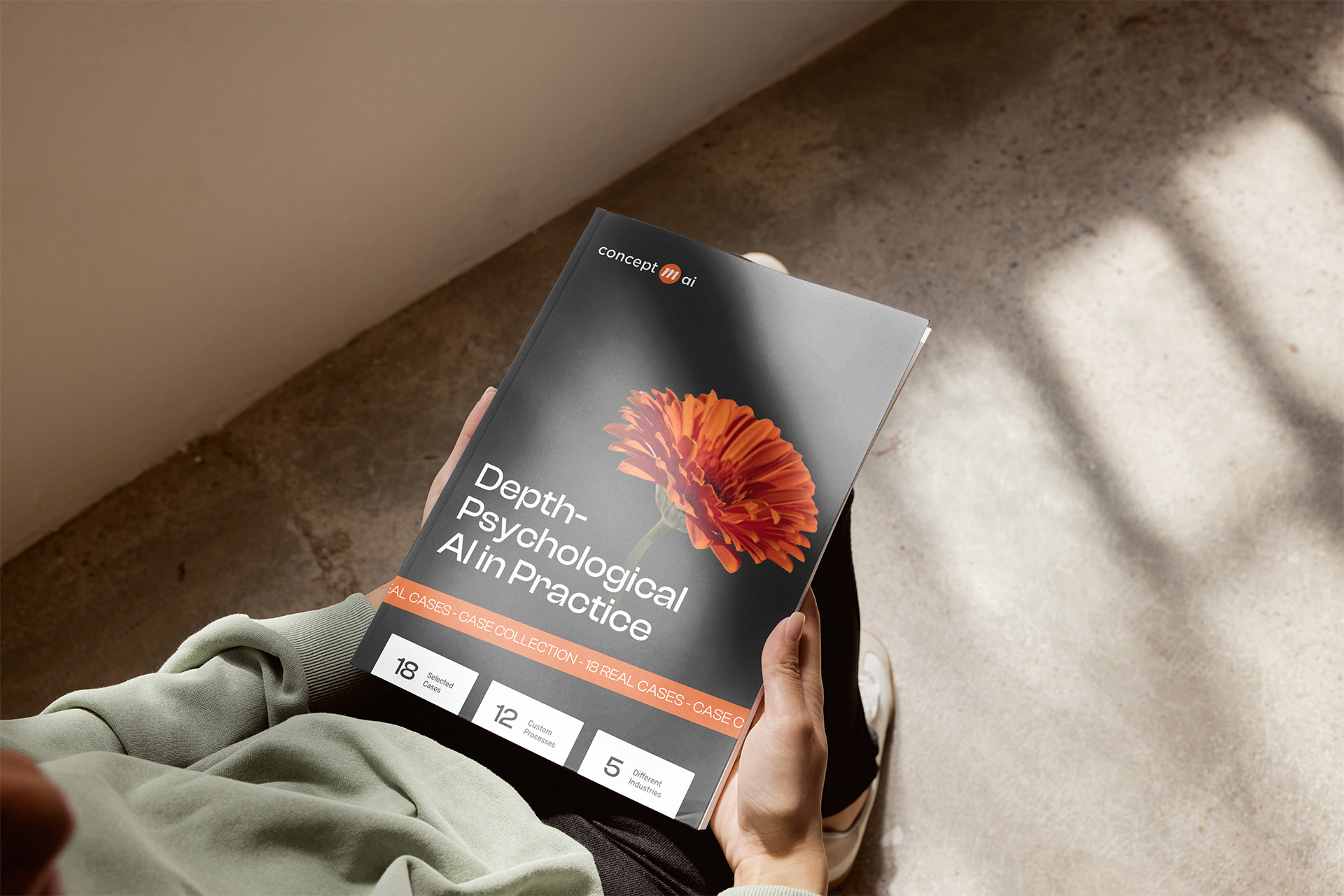
Case Collection ⦁ Free Download
Depth-Psychological AI in Practice
18 cases. 12 marketing processes. 5 industries. For each case: the challenge, the AI persona setup, and the measurable outcome. What’s inside:
Ready to bring
consumers to the table?
Choose your starting point. No pitch deck. No long sales process.
Your first steps with AI Sparring & Screening
You describe your challenge. We configure an AI persona prototype with a psychological match to your market, your target group, and your exact question. Use the AI persona for direct consumer feed back.
Explore AI-Integrated Workflows for your oranization
The opportunities for optimizing your marketing with A-integrated workflows are limitless - from iterative testing processes to complex agentic systems embedded in your organization. We are glad to share our experience.